

Morskie Oko in the Tatras: when to go, how far you walk and what to pack
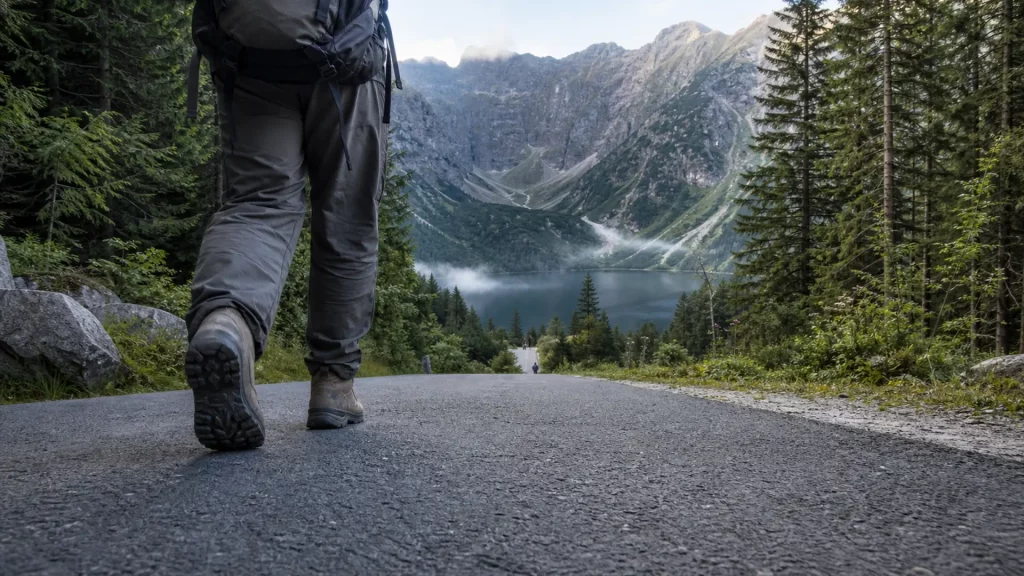
Morskie Oko is the best-known lake of the Polish Tatras and one of the few mountain destinations abroad that travellers from Transcarpathia can reach and return from in a single day. Crystal-clear water at 1,395 metres, the walls of the High Tatras standing in a circle, a wide road instead of technical climbing - that combination is what made the route iconic. But “easy to get to” is not the same as “easy to walk”: this lake has to be earned on foot.
Below is a practical guide: when to go, how far you actually walk, what to wear and what to put in your backpack so that the day in the Tatras is remembered for the views rather than for blisters.
What Morskie Oko is and why people go there
Morskie Oko lies in Tatra National Park not far from Zakopane, and it is one of the largest lakes in the Tatras: about 33 hectares of water, more than 50 metres deep. What impresses is the colour of the water, shifting from emerald to almost black depending on the clouds, and the amphitheatre of summits around it, including Rysy, the highest point in Poland.
For a traveller based in Transcarpathia this is a rare case where genuine high-mountain scenery is available without a multi-day expedition, technical gear or a night in a mountain hut. That is exactly why excursions to Poland from our region almost always mean one thing: Morskie Oko.
When to go: season by season
The route technically works all year round, but the experience differs from month to month.
- June to early July. Deep green forest, full streams, long daylight. The best balance of weather and views.
- July and August. The warmest and the busiest. On peak weekends the road to the lake turns into a continuous stream of hikers, so a weekday here is a privilege.
- September and October. Golden slopes, clear air and noticeably fewer people. Many consider this the most beautiful window, but plan for early dusk and cold mornings.
- November to April. The snow-covered High Tatras look spectacular, yet the road can be icy and real winter holds around the lake. This is for people who deliberately choose the cold and own the footwear for it.
How far you walk and how hard it is
Coaches do not drive up to the lake, and that is a deliberate rule of the national park. The walk starts at Palenica Bialczanska, from where a wide asphalt road leads to Morskie Oko - roughly nine kilometres one way. With the return leg that adds up to about eighteen kilometres in a day. As a rough guide, allow about 2 hours 20 minutes up to the mountain hut by the lake and a little under two hours back down, not counting stops.
The good news: this is not a summit push. The road is even, wide and climbs gradually, with no rock sections, chains or special equipment. No particular fitness training is required - you can walk at your own pace and stop for photos and water. The bad news: nine kilometres uphill are still nine kilometres uphill. People underestimate exactly this - not the steepness, but the duration.
Two practical points before you go. The easiest way to get a Tatra National Park entrance ticket is online at tpn.gov.pl, and the park advises buying it in advance. Horse-drawn carriages and the park’s electric buses cover only part of the road, and the park changes their routes from time to time, so check the current arrangement on the same website. For ordinary visitors neither the carriage nor the bus goes all the way to the lake, so the final stretch is on foot anyway. You do not have to plan the cross-border journey from Transcarpathia yourself: our group’s one-day Morskie Oko trip leaves from Uzhhorod.
Going with children
The route is family friendly and there are plenty of children on the road to Morskie Oko. The question is not difficulty but stamina: a child has to cover the same eighteen kilometres. Pre-schoolers with no experience of long walks will struggle; school-age children who are used to walking manage well, provided you do not rush and take breaks.
One organisational rule matters here: children under 14 travel only when accompanied by an adult. This applies to all of our cross-border routes without exception.
Footwear, clothing and your backpack
The most common reason for a ruined day is new shoes. Eighteen kilometres of hard surface turn any small discomfort into a blister by the halfway point.
- Shoes: broken-in trainers or hiking boots with cushioning. No brand-new pairs, no sandals, no flip-flops, no flat thin soles.
- Socks: one spare pair in the backpack. A trivial item that saves the second half of the day.
- Layers: a T-shirt, a fleece or sweater, and a windproof and waterproof jacket. It is cool at the lake even in July, and the wind is noticeable on open sections.
- A rain shell is mandatory regardless of the forecast. A light rain jacket weighs less than a wet sweater.
- Head cover: a cap against the sun in summer, a warm hat in spring and autumn.
What to pack
A small 15 to 20 litre backpack is the sweet spot. Inside it:
- water - at least one and a half litres per person, more in summer;
- snacks: nuts, bars, sandwiches, fruit;
- a charged power bank - cold weather and constant photography drain a phone quickly;
- sunscreen and sunglasses: at altitude the sun is harsher than it feels;
- personal medication, blister plasters and a small bag for your rubbish;
- some cash in Polish zloty for small expenses, a paid toilet or coffee at the car park. Cards are accepted almost everywhere, but not quite everywhere.
How the trip from Transcarpathia is organised
In our programme Morskie Oko is a one-day coach-and-walking excursion, Morskie Oko in the Tatras. The group gathers in Uzhhorod on Koriatovycha Square; a pick-up in Mukachevo or other towns of Transcarpathia is possible by prior arrangement only, so raise it with the manager while booking. The manager will also tell you the departure time; please arrive at the meeting point no later than 10 to 15 minutes beforehand.
The price covers coach transport, the work of the guide and excursion services. Entrance tickets within Tatra National Park, meals during the day and personal expenses are paid separately. The current price is shown on the excursion page; at the time of publication it is UAH 4,300 per person, with a 10% discount for groups of seven or more.
As for documents and border crossing: the rules are set by legislation and change from time to time, so check the current requirements before you travel. Medical insurance is not included in the price - on a mountain route it is not something to skip.
Summary
Morskie Oko is not a hard day, but it is not a short one either. The formula is simple: broken-in shoes, clothing in layers, a rain shell in the backpack, one and a half litres of water and the willingness to walk about eighteen kilometres there and back. Pick the season to suit yourself - summer for warmth, September for colour and quiet, winter for snow-covered peaks.
If the Tatras leave you wanting more, have a look at the other one-day excursions to Europe from Transcarpathia: Hungary, Slovakia, Romania and Austria are just as close, and each opens up in a single day.