

The Palace of the Counts of Schönborn: imperial splendour and hunting romance
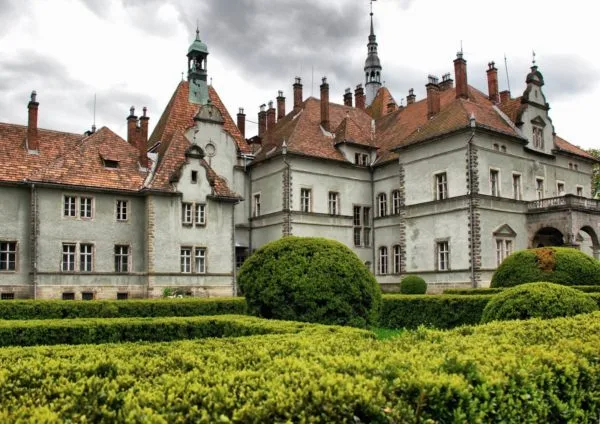
The Palace of the Counts of Schönborn, also known as Schönborn Castle, is one of the most beautiful and best-loved architectural monuments of Transcarpathia, preserved from the days when the Austro-Hungarian Empire ruled here.
The dense forests of the Berehvar tract near the town of Mukachevo were always full of the tracks of wild animals. Graceful roe deer, noble red deer and mighty bears drew aristocratic hunters from abroad. Once the surrounding mountains passed into imperial ownership, the German-Austrian Schönborn dynasty enjoyed the autumn hunt as masters of the land in their own right.
Prince Franz Ferdinand himself once decided to see whether their tales of generous hunting grounds and the healing air of the Carpathians were true. Preparing to receive the monarch, the counts raised a magnificent palace on the site of the old hunting lodge.
The close of the nineteenth century stirred the aristocracy of the flourishing empire with romantic moods. Medieval architecture intrigued them with the mysteries of the sublime, while light-hearted rococo promised sweet daydreams.
The mixture of styles in this masterpiece - the Palace of the Counts of Schönborn, or Schönborn Castle - does nothing to disturb its harmonious appearance. The fairy-tale composition of towers with weathervanes, small balconies and gables carried even contemporaries of the empire away into a dreamlike past. That is why the cream of society - rulers and clergy - stayed here for weeks at a time.
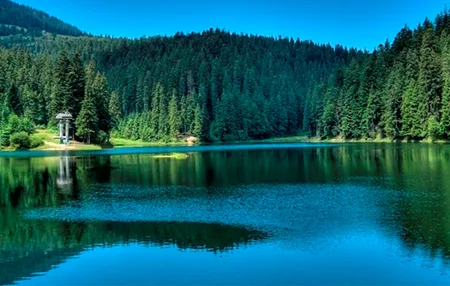
Besides the mountain landscape in whose embrace the hospitable palace nestles, their eyes were delighted by an English park with an arboretum. Rare shrubs and trees from gardens around the world took root remarkably well in this valley. Today their blossom is joined by a rose garden: the petals of 30 varieties wrap a romantic stroll in fragrance. An island in the middle of the pond, shaped like the outline of the Austro-Hungarian Empire, serves as a mirror for the handsome castle and the mountain clouds.
A geographical body of water is a fitting symbolic neighbour for an “astronomical” castle. Following the example of Gothic and French Romantic buildings, Schönborn Castle reflects the cycle of the year. Two wings spread out from the chapel within symbolise the two halves of the year. Above them rise four towers for the four seasons, and 12 entrances lead in from the ground floor.
If the doors correspond to the months, then the windows correspond to every day of the year. In the left wing you can see the “blind” 366th window, for the leap year. Guests are accommodated in 52 rooms - the weeks.
The count had a weakness for symbolism: the fireplace hall is still lit by a very particular chandelier. From an interlacing of stag antlers peers Melusine, the fish-woman. The first owner’s three passions - hunting, women and fishing - were on open display to every guest. Amid interiors of sculpted reliefs and stained glass, the aristocrats admired their trophies. Several dozen deer was an ordinary bag in those days.
The episcopal line of the Schönborn dynasty gave the palace interiors a character of their own. Stained-glass compositions on biblical themes and heraldic symbols adorn its facades. Mass is still celebrated in the Catholic church on the first floor. The Imperial Court Chancellor and Archbishop of Mainz was the first Schönborn to whom the Habsburgs granted this local domain.
Images of crosses in the architectural decor testify to the owner’s clerical rank - although he, already advanced in years, never once visited the corner of Transcarpathia given to him.
Today, by contrast, the palace is visited by the widow of the last representative of the comital dynasty. She knows that it has become the most romantic of mountain sanatoriums, and that the English park with its siliceous “spring of beauty” has been given over to spa guests for their walks. Yet the carved dark-wood staircase still receives her proprietorial step with respect, and the sculpted lions toss their manes, remembering the hunting stories told beneath the chandelier of the fireplace hall.
The romance of imperial splendour set in the rich landscape of the Carpathians enchants us today no less than it did the aristocrats of the century before last - and it certainly deserves your attention.