

Horyany Rotunda - an architectural wonder of Europe

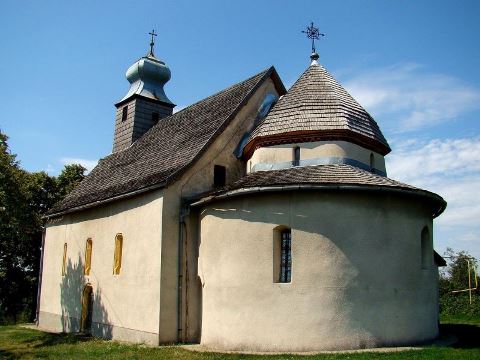
The church stands on the outskirts of Uzhhorod in the Horyany district, renowned for its important archaeological discoveries. It was here that sites from the Stone Age, the Neolithic and the Bronze Age were uncovered, as well as early Slavic and early Rus settlements. To this day it is not known exactly when construction of the rotunda itself began. Some scholars believe the church was begun in the 13th century. Others speak of an earlier «birth» of the church - in the late 10th to early 11th century. This is precisely what allows researchers to claim that the Horyany Rotunda is the third-oldest church in Ukraine, after the churches of St Sophia of Kyiv and St Cyril.
The Horyany Rotunda: what the legend really is
The Horyany Rotunda ( «rotunda» from the Italian - a round building) has a form entirely typical of the Romanesque era yet very rare - a rounded hexagon with sturdy walls up to 2.5 metres thick and narrow windows. There are only a handful of such churches in the world. It is precisely these architectural features that lead some scholars to suggest that the church served as a castle chapel and performed defensive functions. The newer part of the monument - the Gothic rectangular nave of the Church of St Nicholas - was added in the 14th century.
Inside the Horyany Rotunda unique and remarkable frescoeshave been preserved, created more than 700 years ago by Italian artists of the school of Giotto, invited by the Drugéth family. The painting differs from traditional icon-painting, for the faces of the saints express emotion. The walls chiefly depict scenes from the New Testament. These are the most important episodes from the earthly 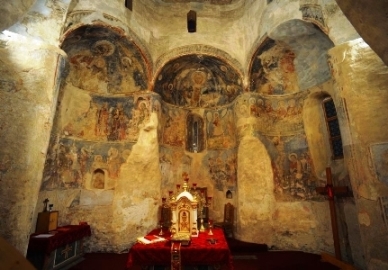
For hundreds of years the rotunda stood forgotten, and in 1879 the church was discovered by chance during repairs: beneath the old plaster, astonishing colourful Italian frescoes came to light. Before long the small, unremarkable church in Uzhhorod became known throughout Europe. Analysis of the frescoes showed that they were executed using a very complex technique that no longer exists today: the damp, still-fresh surface of the walls absorbed a 10-centimetre layer of paint during the painting.
Today parishioners of the Greek Catholic eparchy pray in the Church of St Anne every day and speak of its remarkable aura. In the middle of the last century the church was struck by lightning, leaving it in a dilapidated state for around twenty years. Only in the early 1980s was the sanctuary returned to the Greek Catholic community. In June 2012 the rotunda was solemnly proclaimed a minor basilica, affiliated with the Papal Basilica of Santa Maria Maggiore.