

The Árpád Line - a grand defensive structure in the Carpathians

In the territory of modern-day Transcarpathia, right amid the Carpathian mountains, stands a unique site of global significance and one of the most complex and large-scale defensive structures of the Second World War - the legendary Árpád Line. This grand fortification was built in the Carpathians by the military, engineers and scientists of Hungary and Germany in 1943-1944 - to defend against the advances of the Red Army. Its scale is truly astonishing: 600 kilometres, 300 of which ran through Ukraine, with the remainder - in Romania.
One of the line’s bunkers is open to visitors - it is included in the excursion to the resorts of Zakarpattia with the Árpád bunker.
The features and history of the Hungarian-German “Árpád Line” project
The Árpád Line - was not a single continuous strip. Its foundation consisted of separate so-called “defence hubs”. There were almost a hundred such strongpoints in Transcarpathia. The figures are genuinely staggering: practically 800 permanent firing points (pillboxes), around 400 timber-and-earth firing points (bunkers), over 430 open firing emplacements, 135 km of anti-tank obstacles and 400 km of trenches. It is simply incredible!
The fortification system was named in honour of Prince Árpád, who at the end of the 800s founded the Hungarian empire by uniting all the tribes of the ancient Magyars. The construction plan was designed by the talented Hungarian military engineer Teofil Horoshi. Hungarian and German military strategists were convinced that their point-based defensive system would save an entire nation and would keep out the Soviet enemy, especially if it were built on the hard-to-reach Carpathian ridges from the village of Yasinia in the Rakhiv area to the village of Uzhok in the Velykyi Bereznyi area. During construction the greatest attention was given to such famous passes as the Uzhok, the Veretskyi, the Yablunytskyi and the Torunskyi. The emphasis was on defending tunnels, roads and bridges, and strongpoints were built in the river valleys of the Latorytsia, the Uzh and the Tysa.
In all, researchers have counted six defensive lines in Transcarpathia. Among them are four Hungarian ones, including the famous Árpád Line, and two - Czechoslovak. The region currently holds over 1500 sites dating from the Second World War - 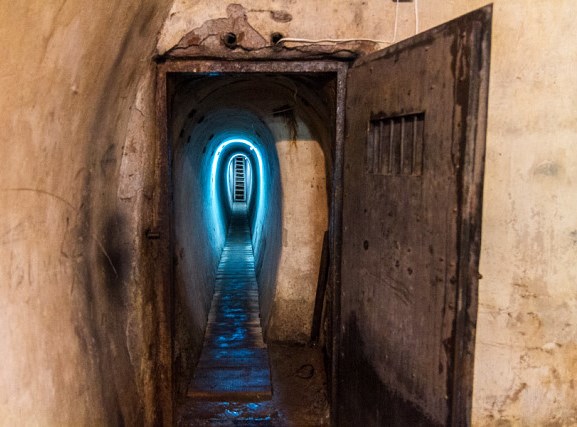
It seemed that trenches, bunkers and pillboxes were built at every turn. The long reinforced-concrete bunkers housed storerooms, hospitals, barracks, control exits, ventilation shafts and bakeries where bread was baked for the soldiers; some even recalled churches. The entire construction operation was carried out under a “top secret” classification and was fully completed by October 1944.
A powerful hub of the defensive line and the failure of the project
One of the most powerful hubs was built at the Uzhok Pass, which let no one through to Uzhhorod. The Veretskyi Pass controlled the Mukachevo direction and blocked the way to Mukachevo. The surroundings of Synevyr were protected by the defensive posts of the local passes, which belonged to the Khust sector of the Árpád Line. Many defensive posts were located in the village of Yasinia (at that time - Kőrösmező), tasked with watching over the Rakhiv direction.
The Germans and Hungarians, however, miscalculated - such a mighty fortified structure did not protect these powerful states. The Red Army resorted to cunning and changed its tactics - it advanced in a different direction across the Svydovets mountain range, descending into the village of Yasinia, where the decisive battles took place. In fact, it was precisely this manoeuvre that spared the other districts of Transcarpathia from bloody battles. Nevertheless, the enemy mined almost all the fortifications of the Árpád Line, and the Hungarian army blew up the bunkers as it fled. Some of the structures that survived the war were destroyed by the NKVD.
The defensive structure today
Nowadays the Árpád Line resembles the ruins of military installations and equipment, as well as so-called small stone 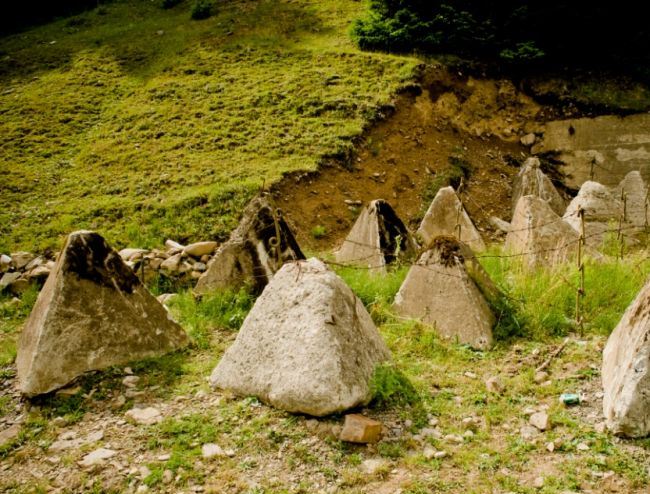
One of the bunkers is located in the village of Verkhnia Hrabivnytsia in the Volovets area, not far from the Veretskyi Pass , and is considered one of the best-preserved in Transcarpathia. It is a tunnel 1500 metres long, dug straight into the rock. Even now, weapons and full military kit have survived here. In the village of Kolochava in the Mizhhiria area, 100 metres of the Árpád Line have become an entire historical-military museum with thousands of exhibits, which today enjoys tremendous popularity among tourists. Dozens of tunnels, living quarters, hundreds of pillboxes and bunkers, anti-tank structures and ditches, mortars, cannons, trenches and hospitals - it is hard to believe that all this and even more was contained in just one such strongpoint! And out of some of the “defence hubs” Transcarpathian entrepreneurs have made genuine hotels!
Today military tourism is developing rapidly in Transcarpathia, attracting enthusiasts of the history of the wartime and post-war years. And the unique Árpád Line has long since become a special tourist highlight of the region, which you can visit during our excursion to the Uzh Valley.