

Wild Berries of the Carpathians: Nature’s Tasty Bounty and Its Benefits
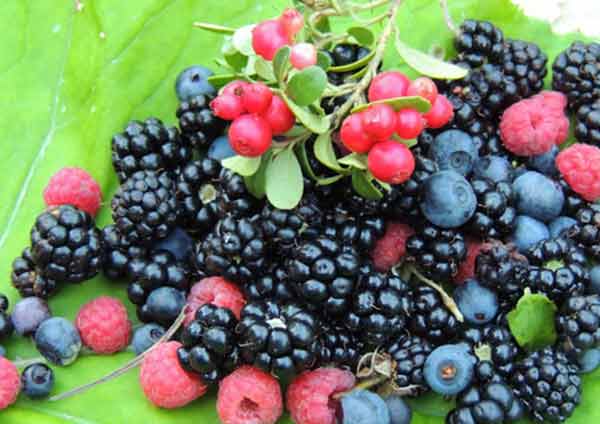
 The forests and mountains of Transcarpathia bring people natural gifts, among them wild fruits and berries. Not all of them, however, are edible. Quite often you can come across ones whose consumption will, at best, cause an upset stomach and, at worst, provoke poisoning with serious consequences. That is why it is essential to have reliable information about which forest berries are actually edible and what they really look like.
The berry season in the high Carpathians is exceptional thanks to an astonishing blend of altitudinal zones. As you climb towards a summit, you can pass through several seasons: returning from early autumn through summer into late spring. At the foot of the mountain you can gather blueberries, on the gentle southern slopes find blackberries and wild strawberries, and even come across crocuses blooming beside the remnants of the winter snowfields.
In the Carpathian foothills the berry season begins at the end of June, while in the highest mountains the berries ripen only in August. First comes the wild strawberry - scattered along woodland edges and spruce clearings, on the mountain meadows, and along the mountain roads. The second half of July is the time of raspberries and wild currants. Afyna - as the mountain folk call the blueberry - appears in the Carpathians in mid-June, but the season of its mass ripening in the mountains is August. From September the hoholzy (lingonberries) begin. Here and there in the high-mountain tundra, on the tops of Chornohora and the Gorgany, cranberries and bog blueberries grow. Berries, unlike mushrooms, do not need to be searched for in the Carpathians - they are everywhere; you only have to set out into the mountains.
Forest Berries: Beneficial Properties
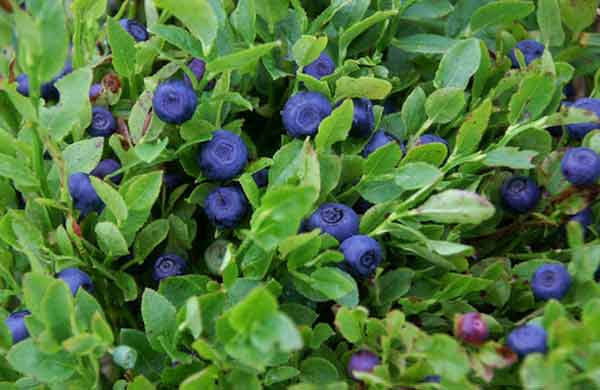 Wild fruits and berries grow in natural conditions, and so they absorb natural nutrients and are almost untouched by civilisation. During their growth and development they are not treated with any chemical preparations intended to protect against pests and diseases.
The content of beneficial biologically active substances, macro- and micro-elements in such berries is off the charts, which is why they are recommended for dietary nutrition.
Forest berries are gathered throughout the summer and autumn, right up to the first snows. One of the first to ripen at the start of summer is the wild strawberry; ripe juniper berries, rosehips or blackthorn are best gathered in autumn, after the first frosts, while in boggy places it is worth looking for cranberries. Along the ravines, in the forest glades, on the banks of rivers and streams, you will surely be unable to walk past the red raspberries or the fragrant blackberries. That said, it is better to gather berries in dry weather from early morning. In wet or rainy weather the berries spoil quickly, while in dry, hot weather they wither fast.
For blueberries, head to the Borzhava ridge: its meadows are almost entirely covered with blueberry shrubs, and locals pick them from July to September. Take the train to Volovets station, 55 km from Mukachevo, where trains from Uzhhorod also stop. Under Article 66 of Ukraine’s Forest Code you may pick berries for your own use in state and municipal forests without a permit, but not in nature reserves or the core zones of national parks. The ridge, up to 1,681 m, is very windy: bring a jacket even in the heat. If you’d rather not go alone, pick the Borzhava meadows on our photo excursion in the Carpathians.
A Short Guide to Processing Berries
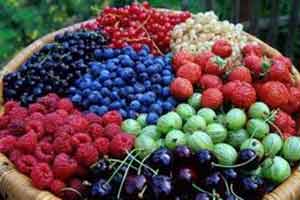 The gifts of the Carpathians are usually dried or ground with sugar. In this form the product’s beneficial properties are preserved best. The berries can also be frozen and, in winter, used as a filling for pies or an addition to homemade ice cream and yoghurts. Do not forget that the best vitamin remedy for strengthening the immune system is a healing tea made from dried berries. Freshly gathered fruits and berries are processed into juices, preserves, jams and compotes. And berry fruit wines, tinctures, cordials and liqueurs made at home will be far tastier and more beneficial than a bottle of the most expensive wine in a supermarket. So, by taking care of your own winter stores in advance, you will have at home a whole cellar full of tasty Carpathian delicacies that add variety to and, most importantly, enrich the diet of the whole family.
The most common fruits and berries that grow in the Ukrainian Carpathians: Common lingonberry, bog bilberry, black crowberry, common hawthorn, common rowan, common cranberry, guelder rose, common hazel, common raspberry, blackberry, wild strawberry, blackthorn, blueberry, rosehip, common juniper.
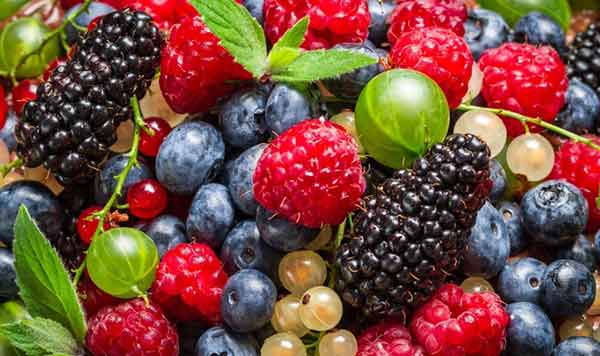
A wonderful souvenir to take home can be a - vitamin mix of Carpathian berries brought back from the Ukrainian Carpathians.
In Transcarpathia there is a huge number of private enterprises that make jams, preserves, juices, dried berries and Carpathian tea, which is exported and can only be bought here during our excursions in the tasting halls. So if you want to build up strategic vitamin stores for winter, come for a holiday in Transcarpathia to combine the pleasant with the useful.