

The Ukrainian Sich Riflemen. Secrets of Transcarpathia
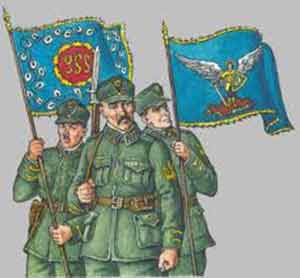
Who has not heard of the Ukrainian Sich Riflemen - the first national military formation of the 20th century?
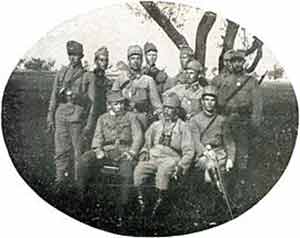
After the First World War broke out, the Austro-Hungarian monarchy was forced to mobilise all available forces. «The Ukrainian Sich Riflemen» - a separate military legion, which the Ukrainian People’s Council proposed to create, uniting the Ukrainian political forces for the duration of the war.
The Austrian government agreed, because it needed volunteers, although it treated the idea with caution. When in August 1914 28,000 young men enlisted in the «Ukrainian Sich Riflemen», the military command of the Habsburg Empire agreed to only 2,500.
They selected the best - almost every one had an education behind him. In essence, this was the flower of the young Ukrainian intelligentsia. Russian troops were advancing on Galicia, and the Sich Riflemen, who had been gathered for their first muster in Stryi, withdrew to Transcarpathia to learn the military craft here.
The Ukrainian Sich Riflemen encamped in the villages of Strabychovo and Horonda near Mukachevo.
The educated, disciplined young men won the favour in Transcarpathia not only of the local youth, but even of the Hungarians. Although at first their appearance was far from parade-ready. The Riflemen wore tattered military clothing of the Magyar region, old footwear, and were armed with rifles of the old single-shot Werndl system, with string instead of a strap.
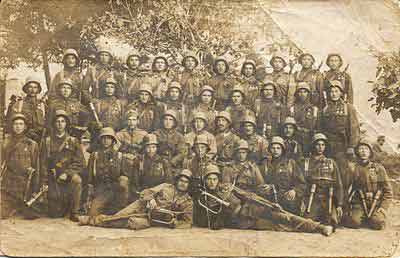
There was little time for training. Russian troops had captured Galicia and had come right up to Transcarpathia. The Austrian command threw in its last reserves. It came to the turn of the Ukrainian Riflemen. The first to set off for the Veretskyi Pass was the company of V. Didushok on 10 September 1914.
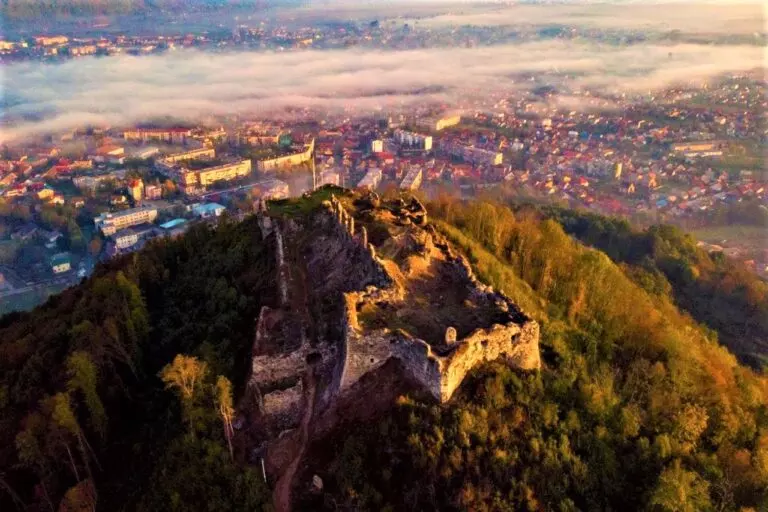
The Carpathian campaign covered the Sich Riflemen in glory. An additional company of the U.S.R. was also stationed in Mukachevo Castle, commanded by Captain Nykyfor Hirnyak. In the castle a Press Quarters was formed (in today’s terms - a press centre). Here a riflemen’s reading room and library were organised, along with a lecture circle.
As the well-known Transcarpathian enlightener and political figure Avhustyn Shtefan recalls in his memoirs, the everyday life of the Ukrainian Sich Riflemen in Transcarpathia had a considerable influence on the awakening of national consciousness among Transcarpathians. The Riflemen often spent the night in peasants’ houses, talked with the villagers, played with the children, taught the young folk and patriotic songs, went to church on Sundays and holidays, and the riflemen’s choir often sang there during the service. People heard the officers speaking the way they did, and not in Magyar.
Since young intellectuals and students predominated among the Sich Riflemen, the riflemen’s movement gave rise to a genuine cultural phenomenon - artistic creativity in military uniforms. The Sich songs became truly popular among the people.
Article “Pro Karpaty“