

Uzhanskyi National Nature Park - a pearl of the Carpathians

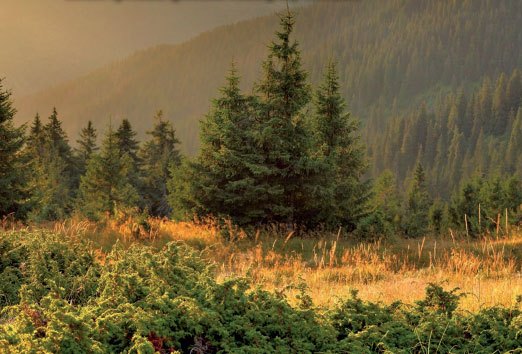
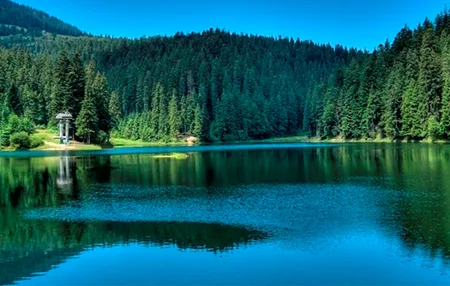
The Uzhanskyi National Nature Park covers an area of almost 40 thousand hectares in the massif of the Eastern Carpathians and the left-bank part of the upper reaches of the River Uzh in the Velykyi Bereznyi district. The park was created in 1999 on the basis of the Stuzhytsia regional reserve. All of this was done in order to preserve the unique Carpathian landscapes and to improve the ecological situation of the country as a whole. The Stuzhytsia reserve itself traces its history all the way back to the days of Austria-Hungary! Already at the beginning of the 20th century, tourist interest in the local natural landmarks grew significantly. It was at that time that the first guidebooks and tourist routes appeared here.
Today the Uzhanskyi National Nature Park is a member of the world’s only International Biosphere Reserve “Eastern Carpathians”. Its other participants are the Bieszczady National Park in Poland and the Poloniny National Park in Slovakia. In addition, the Uzhanskyi park is part of “EUROPARC” - the European Federation of Nature and National Parks.
Uzhanskyi National Nature Park: a rare treasure
The true wealth of the park is considered to be its beech primeval forests. The local natural conditions have turned this place into a fairy tale - magnificent, majestic, ancient beeches, spruces and sycamores, entwined with ivy and adorned with blankets of moss, have grown here for centuries already. For Europe this is not only a rarity but simply a wonder! That is why more than 3 thousand hectares of the national park’s primeval forests are on the UNESCO World Natural Heritage list under the name “Primeval Beech Forests of the Carpathians”.
You will be deeply amazed at how many unique tourist sites and locations familiar to you belong to the Uzhanskyi park! In the Uzhanska Valley there is a large number of mineral springs - more than 15. There are ski resorts operating here with 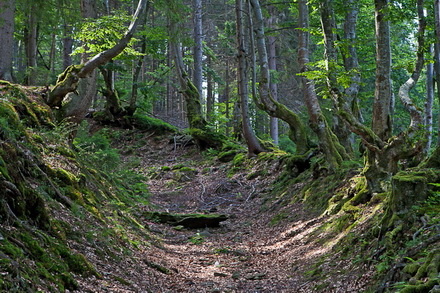
The natural attractions of the Uzhanskyi National Park are impressive and enchanting. First and foremost, this is the Uzhok Pass, from which incredible, breathtaking views of the Eastern Beskids open up, as well as the karst caves of the village of Kniahynia. It is here, in the village of Stuzhytsia, that one of the oldest trees in the country stands - the majestic and mighty thousand-year-old Dido-oak. To embrace it completely, seven people must join hands at once! And one of the most popular trips is a journey to the Chorni Mlaky tract of the village of Kniahynia, where in 1866 a huge meteorite weighing almost 300 kg fell! Fragments of this meteorite are today exhibited in the museums of Krakow, Moscow and Vienna.
Excursions to the Uzhanskyi National Nature Park: remembering history
The Uzhanskyi National Park has a good, well-developed infrastructure. Recreation areas have been arranged here, as well as walking eco-tourist routes - 17 in all, with a total length of more than 140 km. These routes run through the picturesque corners of the park and its most interesting sites - the beech primeval forests, the subalpine meadows, the sources of the River Uzh, the Uzhok Pass, the legendary defensive Árpád Line, and the Watershed Ridge. At present, international cycling routes are being developed on which tourists will be able to see interesting natural and historical-cultural sites of Poland, Slovakia and Ukraine.
It is simply incredible how many valuable plants there are here - more than 200 medicinal ones and around 40 very rare species listed in the Red 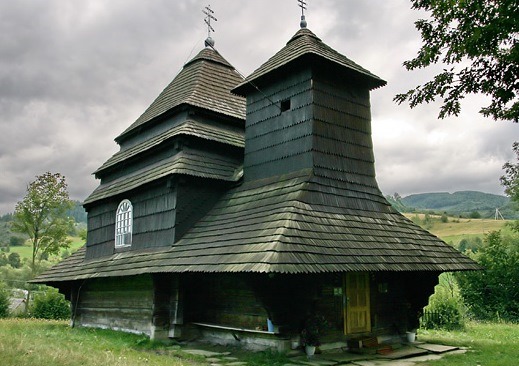
The National Park is most proud of a genuine marvel of Transcarpathian folk architecture - the ancient wooden churches of the 17th-18th centuries. They were built mostly by unknown, brilliant craftsmen, without a single nail and without modern tools. Today, 6 of these churches hold the status of world architectural monuments. The most famous among them are the Church of the Intercession of the Most Holy Mother of God in the village of Kostryno and the Church of St Michael the Archangel in the village of Uzhok, which is inscribed on the UNESCO heritage list. It is hard to believe that all these masterpieces were made simply “by eye” - an incredible experience!