

The blooming of the Valley of Daffodils in Khust - a true wonder of nature

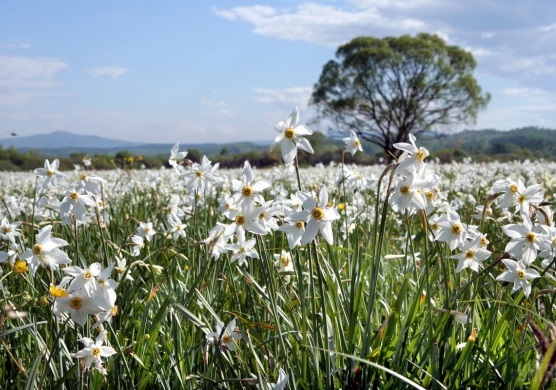
Today, the Valley of Daffodils in the Khust district is part of a UNESCO biosphere reserve. Such a mass, simultaneous flowering of the Valley of Daffodils is virtually unique in the world. Set close to the town of Khust, in a picturesque tract between the Tysa and Khustets rivers, the Valley of Daffodils truly astounds with its sheer scale. This area has a special microclimate, mountain rivers, thermal waters, alpine meadows and ancient forests, home to many rare animals. In all, almost 500 different plant species have been recorded in the valley, growing across more than 256 hectares. Among them, 16 species are orchids (simply incredible!) and 15 are the rarest species in Ukraine. Few people know that daffodils like these can only be found in the mountain ranges of the Alps, the Balkans, and the Southern and Eastern Carpathians. In Ukraine, they grow only in Transcarpathia.
The high-mountain wild narrow-leaved daffodils that bloom in the valley are listed in Ukraine’s Red Book. The valley itself forms part of the Carpathian Biosphere Reserve. Herein lies their uniqueness - they grow at an altitude of 180-200 metres above sea level. The valley itself formed back during the Ice Age, when a vast mass of earth slid down from the surrounding mountains. According to researchers, it was this very soil that held the daffodil seeds, and when the ice retreated, streams of water poured into the valley and nourished the plants. This is how the daffodils managed to adapt to the harsh mountain conditions, so difficult for their population.
The blooming of the Valley of Daffodils in Transcarpathia: features and legends
They bloom for only a very short time, barely ten days - roughly from the last ten days of April until mid-May, which makes a visit to the blooming Valley of Daffodils an excellent choice for a getaway over the May holidays in Transcarpathia. In recent years the climate and the composition of the local soils have changed somewhat - this is noticeable all over the world and is, above all, linked to global warming. This factor has had a considerable impact on the Valley of Daffodils too: for example, they have started to bloom a little earlier and their population declined slightly. That is why, if you have not yet seen the unique blooming of the Valley of Daffodils, it is important to visit the reserve this very spring - next time the chance may no longer be there.
Interestingly, the daffodil itself is a poisonous flower with a heady, intoxicating scent. Local people would deliberately stuff it into 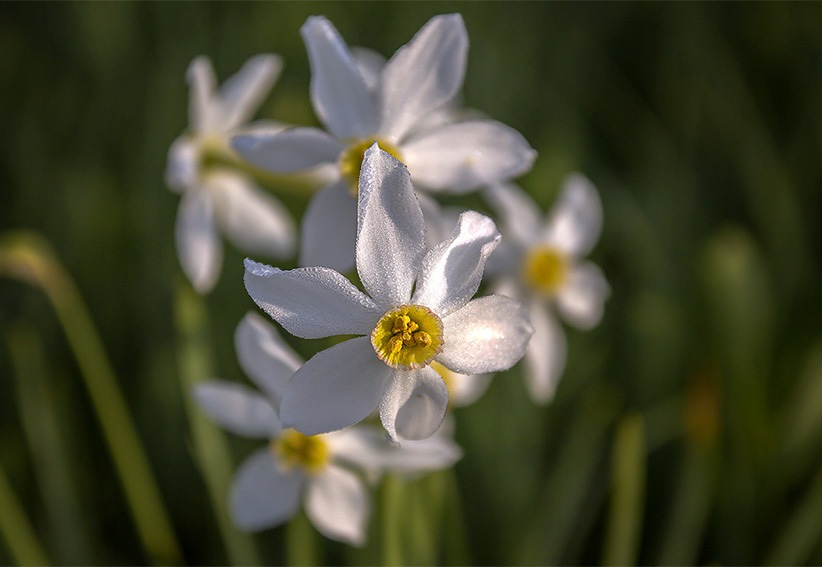
Another legend says that the Greek god Narcissus himself gazed at his reflection in the waters of the Khustets river and fell in love. His heart could not bear the longing, and he remained in the valley forever, becoming a great field of daffodils.
The Valley of Daffodils enjoys a wonderful location, for near this natural wonder there are many other tourist attractions. In particular, right nearby lies the village of Iza, renowned for its craft of wickerwork and its unique willow-branch products. Not far from the valley you can taste and buy Carpathian eco-cheeses, made using modern Swiss techniques at the cheese dairy in the village of Nyzhnie Selyshche. It will be a real joy to see and feed the Carpathian red deer at the local farm. And those who love to unwind can relax at the thermal waters in the village of Veliatyno.
You can step into a true floral paradise at the blooming of the Valley of Daffodils in Transcarpathia on our excursion to Khust - Highlights of the Khust District.