

Vynohradiv - a town of royal privileges: architecture and notable landmarks

The history of the town’s origin and its name
In the distant past, Vynohradiv had a different name. At first, in the 10th century, the town is mentioned as Uhocha - this is recounted in anonymous accounts describing the invasion of Hungarian tribes into the Danube Lowland. Later, after the devastating raids of the Tatar-Mongols, the town was reborn and received the name Sevliush, which translated from Hungarian means “of the vine”. Such a name is quite logical - the local warm and mild climate and fertile soils were favoured by vineyards, which to this day are regarded as the calling card of the region.
After the Second World War, in 1946, the town received its modern name - Vynohradiv. However, it still remains a secret who actually founded the town - history mysteriously keeps silent about it. But the most interesting fact is that ancient Sevliush held special royal privileges - in 1329 the monarchs of the Kingdom of Hungary confirmed and granted the town Magdeburg rights. Sevliush began to flourish. In those days, gaining the right to self-government, a free market, a free crossing over the Tysa or even having its own court was considered almost beyond belief.
Vynohradiv was an important defensive and strategic site. After all, it was through here that the legendary Salt Road passed. In those days salt was worth its weight in gold and was an important trade and industrial raw material of our region. It was mined in the pits of the village of 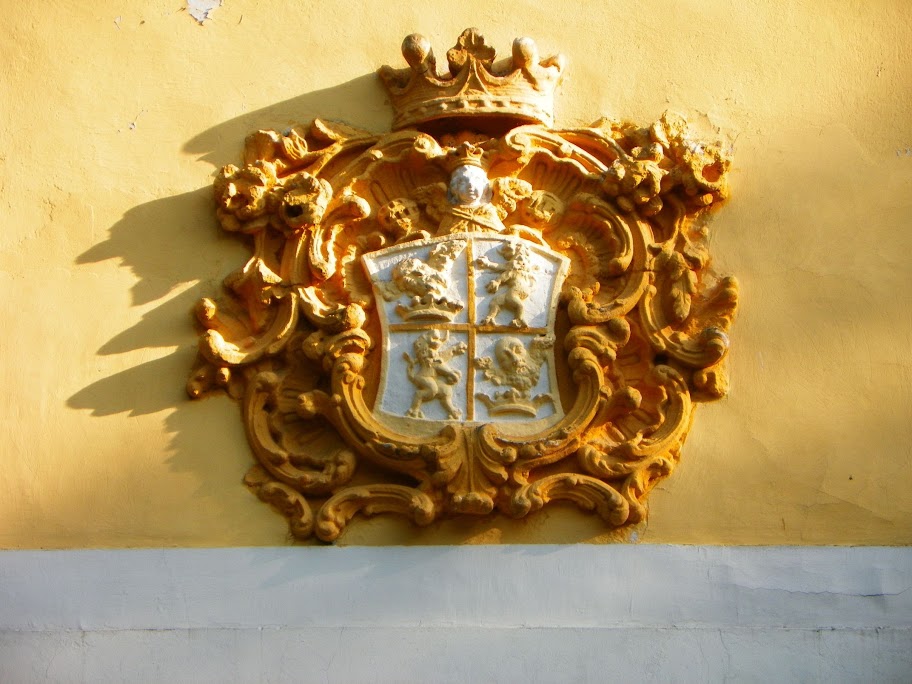
Vynohradiv: which landmarks to visit
Kankiv Castle
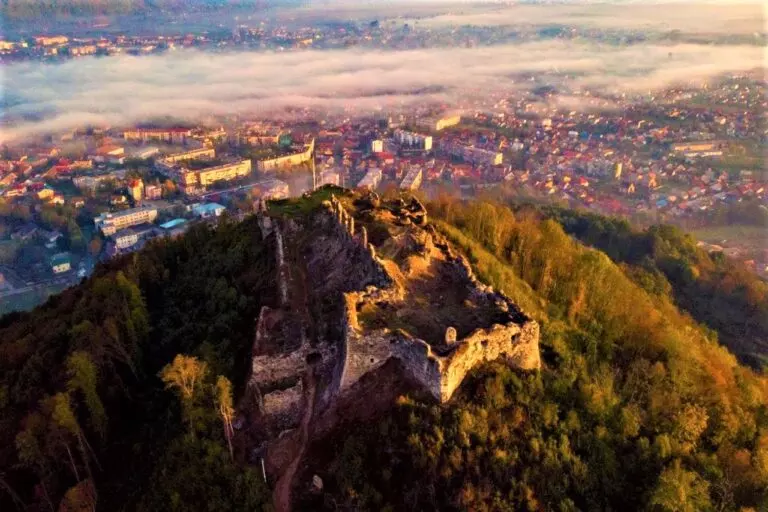
Chorna Hora (Black Mountain) was once an active volcano - according to scholars, this is evidenced by the very shape of the terrain, as well as by the extinct craters and enormous volcanic boulders scattered everywhere here. Since 1974 it has been a botanical nature preserve (zakaznyk) of national importance, and it attracts tourists from far and wide. Moreover, it is here that the medieval Kankiv Castle - the first fortification, built by the Hungarians on the site of a Slavic hillfort in order to defend and control the Salt Road along the Tysa - is located.
There are many theories connected with the origin of the castle’s name. Some researchers say that in the Middle Ages the fortress was owned by a famous brigand named Kanko, others - that the Franciscan monks who lived in the castle wore a “kanko” - a garment made of sheep’s wool. Kankiv Castle is often called the “Transcarpathian Stonehenge” - it still keeps incredible secrets, which you will discover during an excursion to the royal town of Vynohradiv.
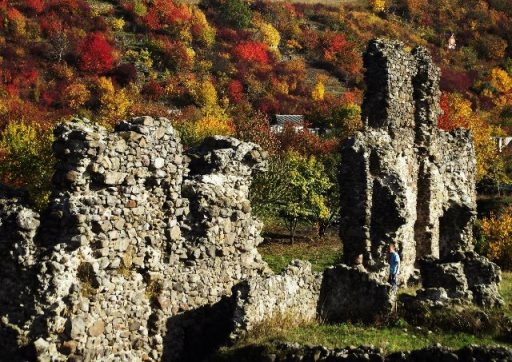
Today only ruins remain of the fortress. But Kankiv has an astonishing history! Originally it was built of wood, and it became stone in the days of Baron Peter Perényi, to whom the castle and the surrounding lands were granted by King Sigismund. In the 15th century the fortress was handed over to monks of the Franciscan order, but a hundred years later fate played a cruel trick. A descendant of the Perényi family, who had adopted Protestantism, stormed the castle - and the fortress was completely destroyed.
The palace of the Perényi baronial family
One of the architectural gems of Vynohradiv is enchanting - the palace of the Perényi baronial family. It was originally part of the town’s fortifications and was later rebuilt into a Baroque-style residence. Today the building impresses with its graceful silhouettes, its frescoes, the coat of arms of the Perényi family and its shingled roof. It now houses the 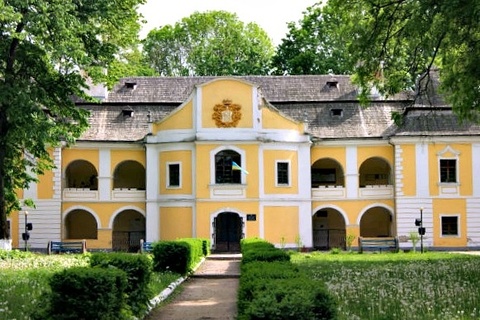
Particular attention is drawn to the Franciscan friary, known as far back as 1516. It is an entire monastery complex comprising a Gothic basilica, a two-storey building of cells and the remains of the monastery garden. In the monastery wall you will see the unique Chapel of Saint Francis, and original 19th-century murals have also been preserved here.
Among the other architectural masterpieces and most ancient landmarks of Vynohradiv - the Church of the Ascension. The stone church is notable for its tall three-tiered bell tower, which once served as a watchtower. In addition, the church has preserved 15th-century stone carvings and original fresco paintings. Services are still held in the Roman Catholic Church of the Ascension. Also of great interest in Vynohradiv are the Greek Catholic church (1796), the building of the former 19th-century synagogue, and the monuments to the winemaker and to the girl pressing grapes.
Not far from Vynohradiv, in the village of Botar, there is a unique lekvar museum. Here you can sample several kinds of delicious and distinctive, environmentally friendly fruit jam. On the way to Vynohradiv, it is worth taking a stroll in the arboretum with its exotic trees, and also to stop in the famous village of Velyka Kopanya, home to the legendary “spring of the twins”.
Vynohradiv is 93 km by road from Uzhhorod. From Mukachevo you can take the train: the Kyiv - Solotvyno service stops both in Mukachevo and at Vynohradiv-Zakarpatskyi station, but check the current timetable with Ukrzaliznytsia (Ukrainian Railways) before you set off. The ruins of Kankiv stand on the eastern edge of town at the foot of Chorna Hora, so allow time for the walk and wear comfortable shoes. The Perényi palace at 10 Kopanska Street is occupied by a city council department, so plan mainly on the facade and the park that adjoins it. Rather than juggling train times and hunting for the path to the ruins, you can join our excursion to Vynohradiv from Uzhhorod; the stop at Chorna Hora is already part of the route.