

Transcarpathian Cuisine and Its Three «K»s
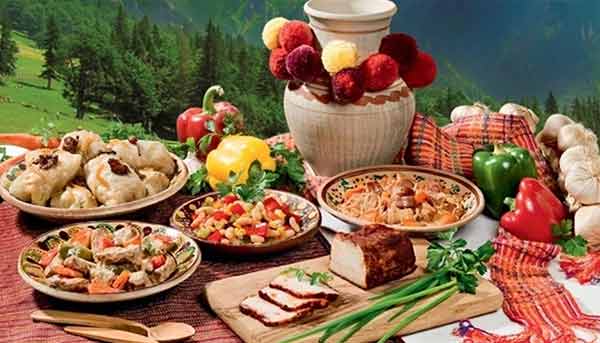
Transcarpathian cuisine is interesting in that it has combined several traditions which, in other places, develop separately from one another. First of all, it merges here the tastes of Ukrainian farmers and of the steppe nomads that the ancient Hungarians were. From the former come plenty of flour-based dishes, various porridges, salads, pork and chicken. From the latter - various soups (cooked in the evening at a halt in an enormous cauldron for the whole community), pungent seasonings (which dull the appetite), smoky kebabs of cattle and of small livestock, and plenty of dairy.
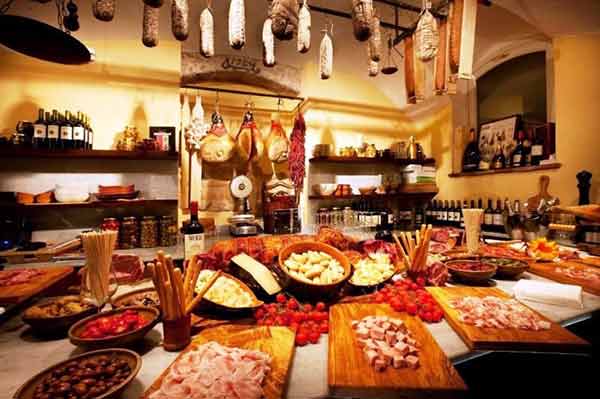 Strong Mediterranean influences were layered on, when the Kingdom of Hungary extended its borders to the Adriatic, the Angevin dynasty established itself on the throne, and in Transcarpathia the Drugeth counts of Sicilian origin. Vineyards and orchards filled our region, and the dairy cuisine was enriched with the most varied cheese recipes.
After Batu’s invasion, the Hungarian kings began to invite German settlers into the thinned-out Transcarpathian towns. With them came a genuine cult of beer (today more than a dozen mini-breweries with original recipes operate in the region) and sausage.
The Jews added their own note - above all a variety of snack appetisers (cheap and cheerful).
Slovaks and Czechs reinforced the already flour-heavy Ukrainian cookery with knedliky dumplings in gravy.
Transylvanian and Maramureș Romanians added a mountain character and strong infusions.
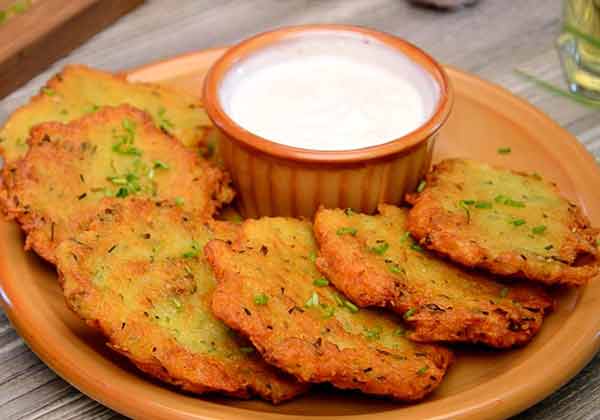 When Columbus sailed to America, it is said that there was at least one Transcarpathian aboard his caravels. So the potato reached our region fairly quickly and took root here nicely, especially in the Verkhovyna highlands, where more delicate crops do not ripen. There are several local recipes for potato dishes, but the most popular remain kremzlyky (potato pancakes).
And from the end of the 19th century our migrant workers already travelled all over the world and brought back new recipes from everywhere. From France they even brought the recipe for frogs’ legs, although these remained an exotic dish anyway. Everything was given a final polish by Stalin’s «Book of Tasty and Healthy Food», which simplified all the complicated recipes as much as possible, convinced people that missing ingredients could be replaced with any others one imagined, and thereby set the culinary imagination completely free. True, in Transcarpathia that book was read with a fig in one’s pocket, which is why even standard restaurant dishes here have kept their local colour. In recent decades, practically naturalised among us have now become pizza and sushi. That said, even they now carry a Transcarpathian accent - their own recipes for pizza dough (not to mention the fillings and sauces) and their own recipes for sushi.
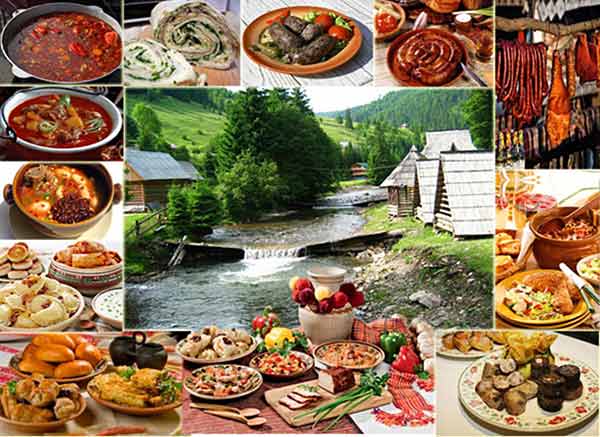 Despite such a complex origin, Transcarpathian cuisine did not become eclectic but, through centuries of trial and error, eventually developed a face of its own. The basis of traditional Transcarpathian cuisine is formed by three «vitamins K»: cabbage, beans and potato. These are three crops that grow best in foothill terrain, so it is on these three pillars that the local cuisine rests. But not only for that reason.
Since olden times Transcarpathia was an area of traditional pig farming, and it is precisely these three «K»s that best accompany fatty pork as a side dish.
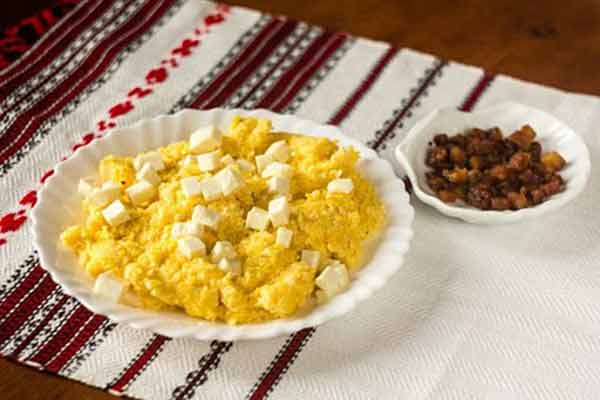 However, pigs were bred mainly in the lowlands, among the numerous oak groves, where the animals found food for themselves. In the mountainous areas people kept sheep, so Transcarpathian cuisine is very rich, on the one hand, in a variety of kebabs, of which there are dozens here, and on the other - in products made from sheep’s and goat’s milk: cheese, vurda, brynza, tokan. The latter is made from sheep’s cheese and maize flour. Maize - the fourth Transcarpathian «K», which penetrated here from the Turkish domains in the 18th century and has been firmly established in the Tysa valley ever since. The traditional Transcarpathian bread is made of maize.
And besides, most of our housewives always preferred, above all other dishes, precisely cabbage salads, because they are neither embarrassing to put on the table nor a pity to eat!
From the end of September they would begin here to chop the cabbage, to take out and shred the greens, to steam the oak tubs and the bottomless barrels in which a person could freely drown. If the local storytellers are to be believed, more than one unclean soul perished in such barrels.
When in every yard they began to chop and shred the cabbage, such a sound stood over town and village as if everyone without exception had begun a whimsical rhythmic dance, some esoteric rite with far from unambiguous consequences. The streets danced, the houses trembled, swaying their tall roofs and rattling their windows, the sky danced above them, the river traditionally began to overflow its banks and flood the just-emptied gardens. From the larger cabbage heads the pickling came out sweeter and more tender, from the greener ones - firmer, with a slight bitterness. Cabbage is indeed the caput of it all!
Moreover, sauerkraut with caraway went perfectly with pork, which was always eaten here to excess; the sour vegetable at least somewhat balanced the animal fat. Especially if, in preparing the dish, they did not spare the pungent onion.
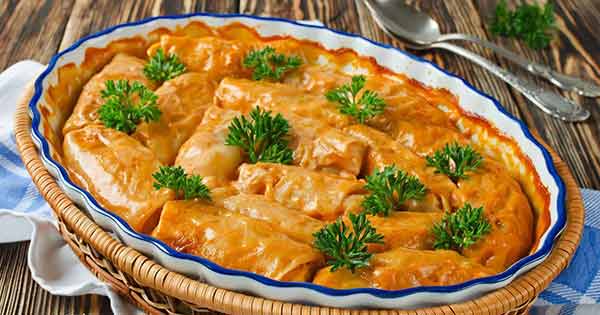 On the Transcarpathian table, everything begins with cabbage (light salads) and everything ends with it (cabbage rolls). The latter were made here not only with rice but with practically all other grains, including maize, and are also stuffed with beans. And plenty of spices are put in there too.
In Transcarpathia more than 100 culinary festivals are held, each of them dedicated to particular dishes: cabbage rolls, lekvar, strawberries, fish soup, potato dishes, banosh, tokan, brynza, wine, honey, apples, forest berries and so on.
Transcarpathian cuisine - an embodiment of sunshine, mountain air and the fragrance of the forest.
It has absorbed all the best from various corners of the planet and creatively reworked it, and is therefore able to satisfy the most demanding and most contradictory tastes.